Lifestyle & Wellness
Eco-Challenge
Eco-Challenge
Promoting sustainable consumption through interactive challenges and educational resources.
Promoting sustainable consumption through interactive challenges and educational resources.
Overview
Eco-Challenge is an interactive website helping people build sustainable habits through simple challenges and resources
My Contributions
User Interviews, User Testing, Wireframing, Information Architecture, Visual Design
Overview
Eco-Challenge is an interactive website helping people build sustainable habits through simple challenges and resources
Eco-Challenge is an interactive website helping people build sustainable habits through simple challenges and resources
Problem
Sustainable consumption can be confusing. People often don’t know how their choices impact the environment
Sustainable consumption can be confusing. People often don’t know how their choices impact the environment
Challenge
How might we encourage people to practice sustainable consumption through simple, manageable challenges?
How might we encourage people to practice sustainable consumption through simple, manageable challenges?
My Contributions
User Interviews, User Testing, Wireframing, Information Architecture, Visual Design
User Interviews, User Testing, Wireframing, Information Architecture, Visual Design
Overview
Eco-Challenge is an interactive website helping people build sustainable habits through simple challenges and resources
My Contributions
User Interviews, User Testing, Wireframing, Information Architecture, Visual Design
Context
Living sustainably is something many young adults want to do, but it often feels overwhelming. Busy schedules, daily routines, and unclear guidance make even simple eco-friendly actions hard to maintain. To understand their experiences, we explored existing resources and spoke with young adults about the challenges they face in adopting sustainable habits.
What stands in the way of adopting sustainable habits?
Everyday barriers make sustainable living difficult
People face practical challenges, such as lack of time, convenience, or available resources, which make it harder to adopt eco-friendly habits
Low awareness drives unsustainable habits
People often underestimate the environmental impact of their daily actions, which contributes to ongoing unsustainable practices.
Challenge
Challenge
How might we encourage people to practice sustainable consumption through simple, manageable challenges?
How might we encourage people to practice sustainable consumption through simple, manageable challenges?
Solution
Solution
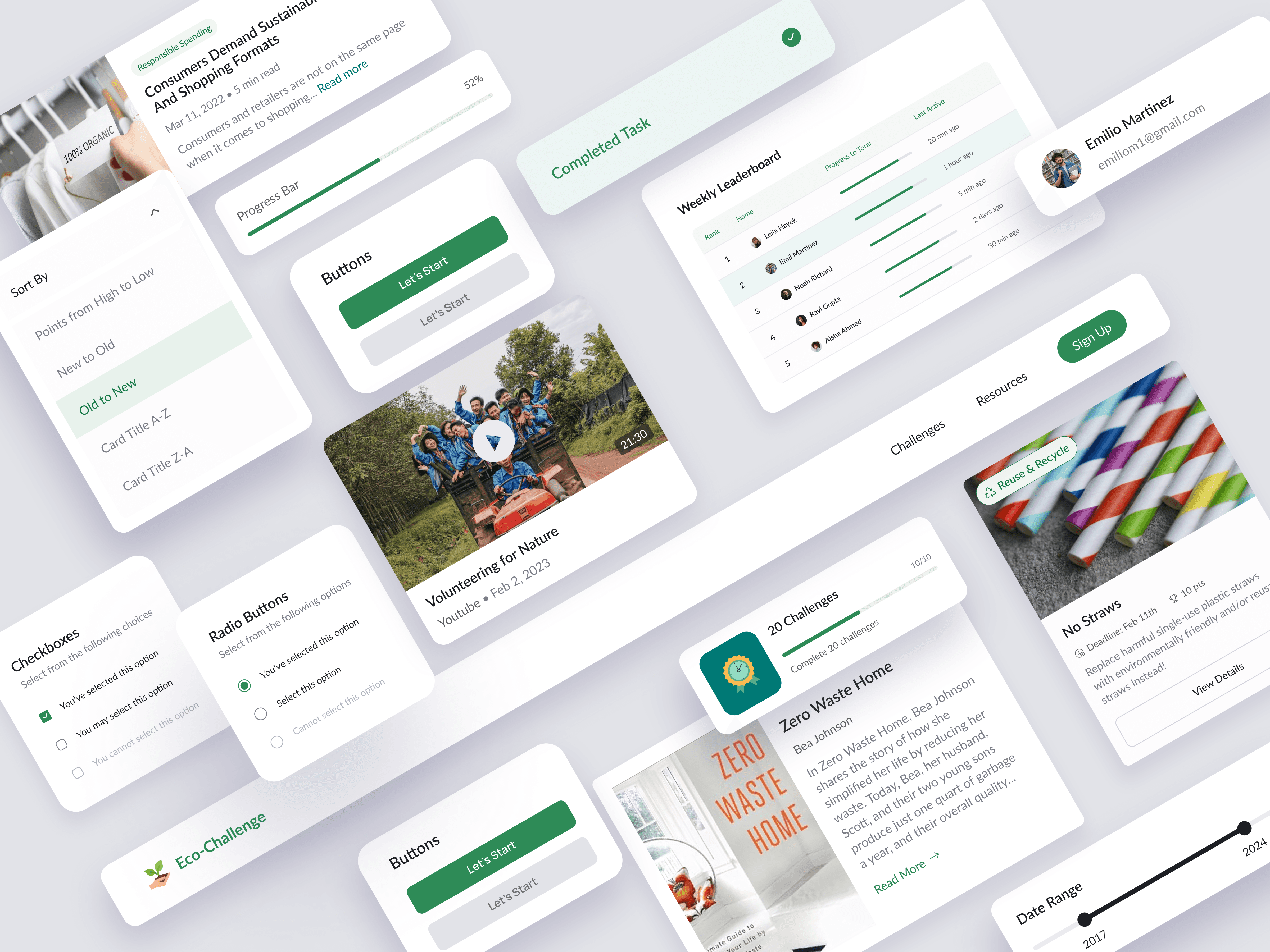
A website combining practical resources and interactive challenges to guide young adults in adopting sustainable habits, making mindful choices, and taking concrete steps toward more eco-friendly daily lives. The website includes two main features:
A website combining practical resources and interactive challenges to guide young adults in adopting sustainable habits, making mindful choices, and taking concrete steps toward more eco-friendly daily lives. The website includes two main features:

Sustainability Resources
Sustainability Resources
A collection of relevant, easily accessible resources to support learning
A collection of relevant, easily accessible resources to support learning

Eco-Friendly Challenges
Eco-Friendly Challenges
Eco-friendly practices become interactive challenges to lessen intimidation
Eco-friendly practices become interactive challenges to lessen intimidation
Research
Research
How Young Adults Approach Sustainability
How Young Adults Approach Sustainability
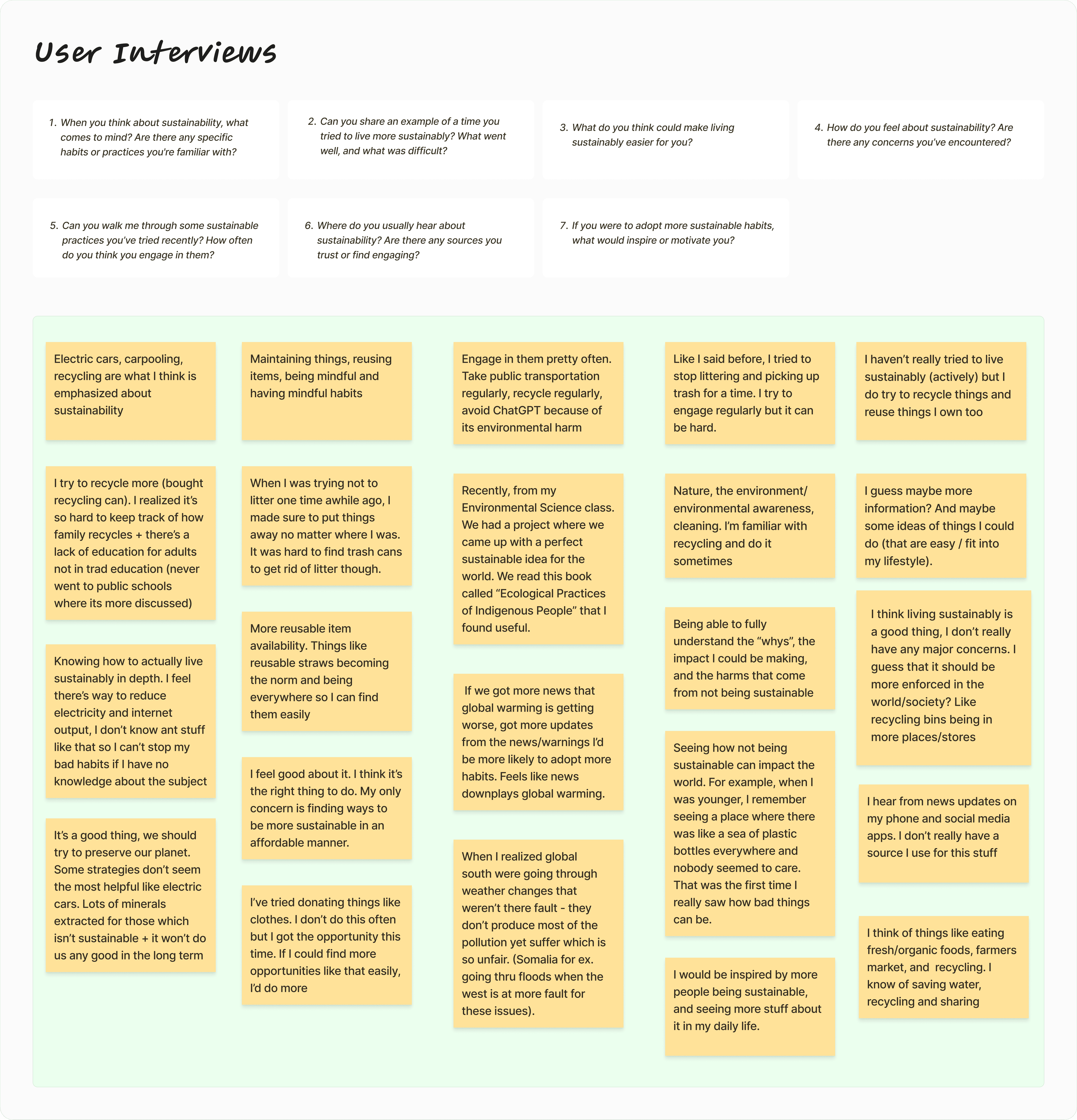
We spoke with young adults to understand their experiences with sustainability, the obstacles they face, and what support would help them take action.
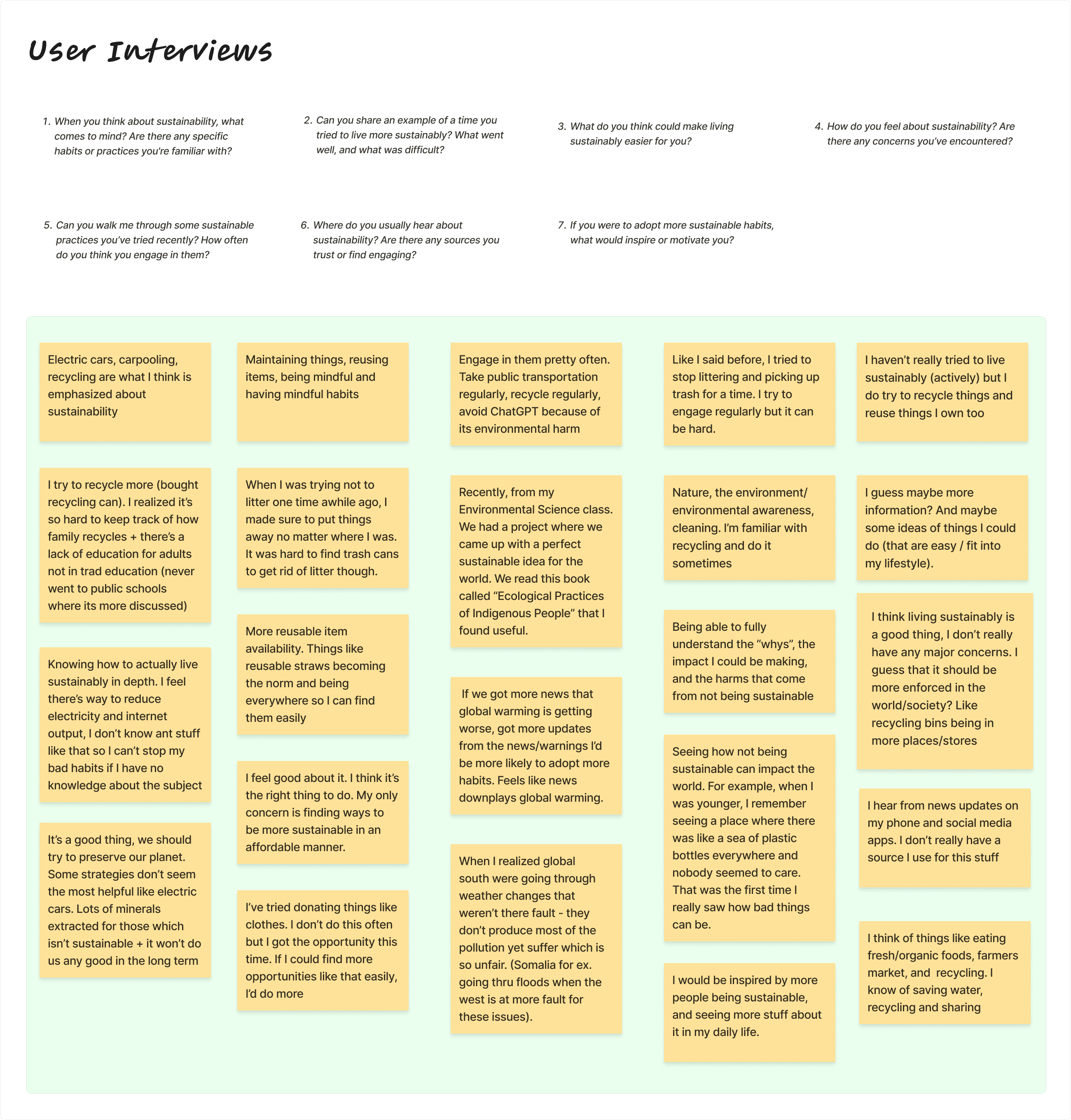
We spoke with young adults to understand their experiences with sustainability, the obstacles they face, and what support would help them take action.
People need clearer guidance on how to live sustainably
People need clearer guidance on how to live sustainably
Many want to adopt better habits but lack practical knowledge about what actions to take in everyday life
Many want to adopt better habits but lack practical knowledge about what actions to take in everyday life
Convenience influences behavior
Convenience influences behavior
Seeing the real-world impact of unsustainable behavior encourages people to reflect on their habits and adopt better ones
Seeing the real-world impact of unsustainable behavior encourages people to reflect on their habits and adopt better ones
Awareness of environmental impact motivates change
Awareness of environmental impact motivates change
Seeing the real-world impact of behavior encourages people to reflect on their habits and adopt better ones
Seeing the real-world impact of behavior encourages people to reflect on their habits and adopt better ones
Exploring The Sustainability Space
Exploring The Sustainability Space
Next, we looked at websites and apps focused on sustainability, noting what felt useful and what could be done differently.
Next, we looked at websites and apps focused on sustainability, noting what felt useful and what could be done differently.
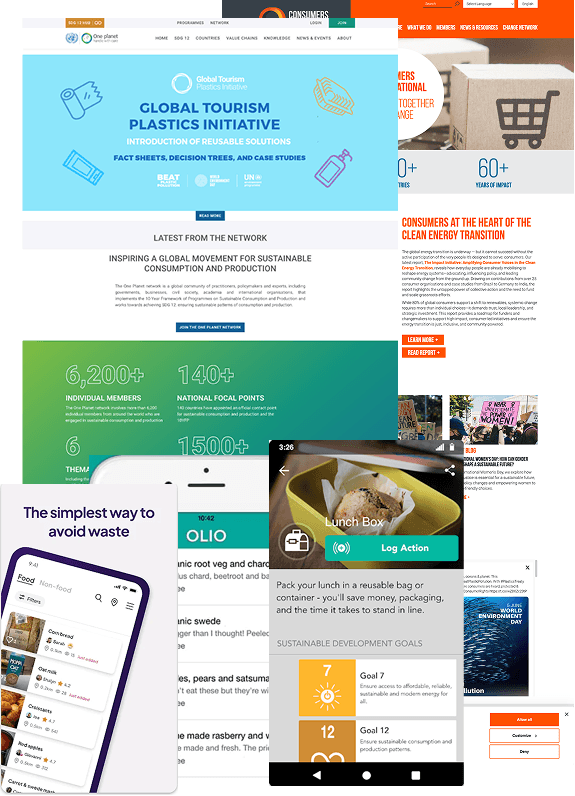
Offering different ways to engage with content encourages users to remain active on the platform
Offering different ways to engage with content encourages users to stay active
Too much content can overwhelm and demotivate users. Information should be organized clearly and limited if necessary.
Organize information clearly. Too much content can overwhelm and demotivate users
Guided actions can help users engage with content and stay engaged over time
Guided actions help users engage with content & stay engaged over time
Ideation
Ideation
With a better understanding of the problem space and users, we moved into ideation.
With a better understanding of the problem space and users, we moved into ideation.
Site Map
Site Map
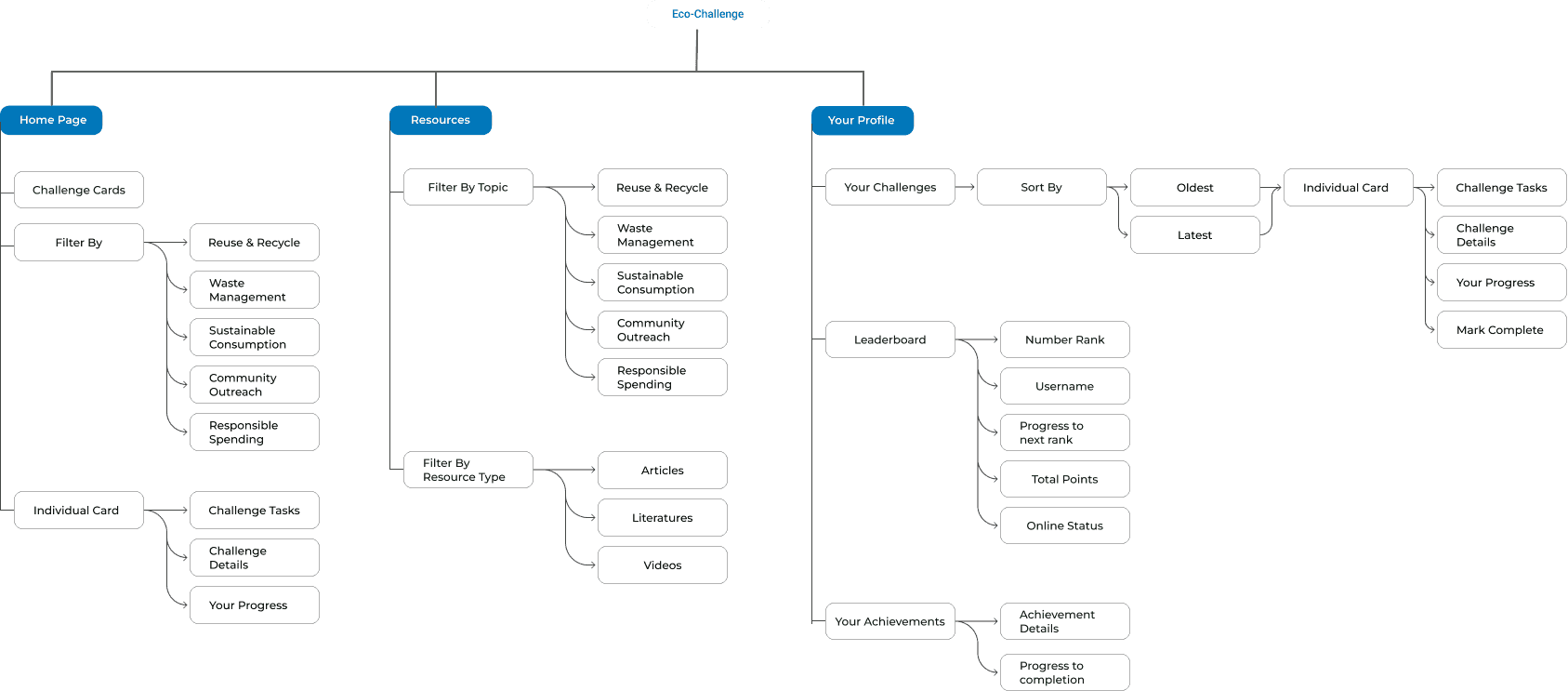
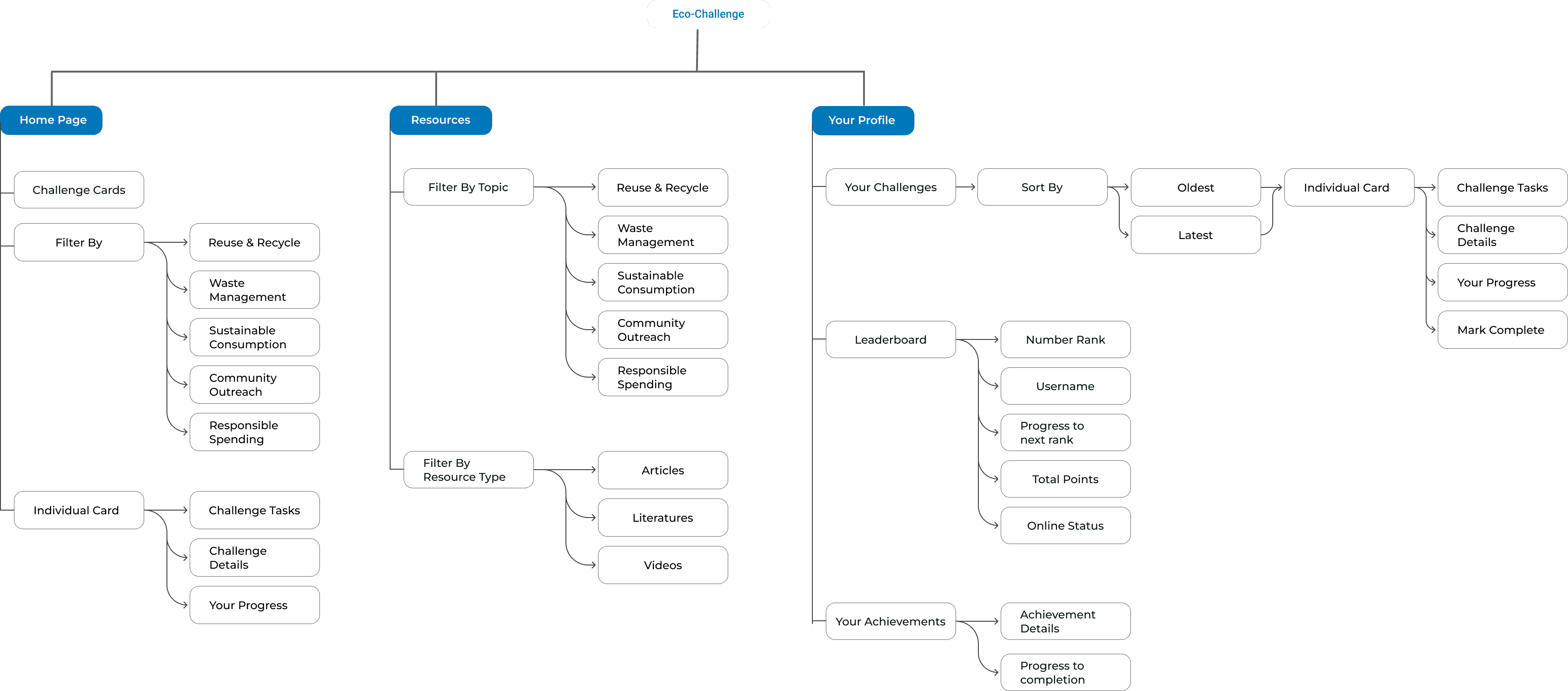
We began by mapping out the website’s architecture, visualizing how each page and feature would fit together.
Using our research insights, we started the ideation phase by defining the website's structure and architecture through a site map.
Site Map
We began our ideation phase by defining the website’s structure and architecture through a site map.
Site Map
Using my research insights, I started the ideation phase by defining the app’s structure and architecture through a site map.
User Flow
User Flow
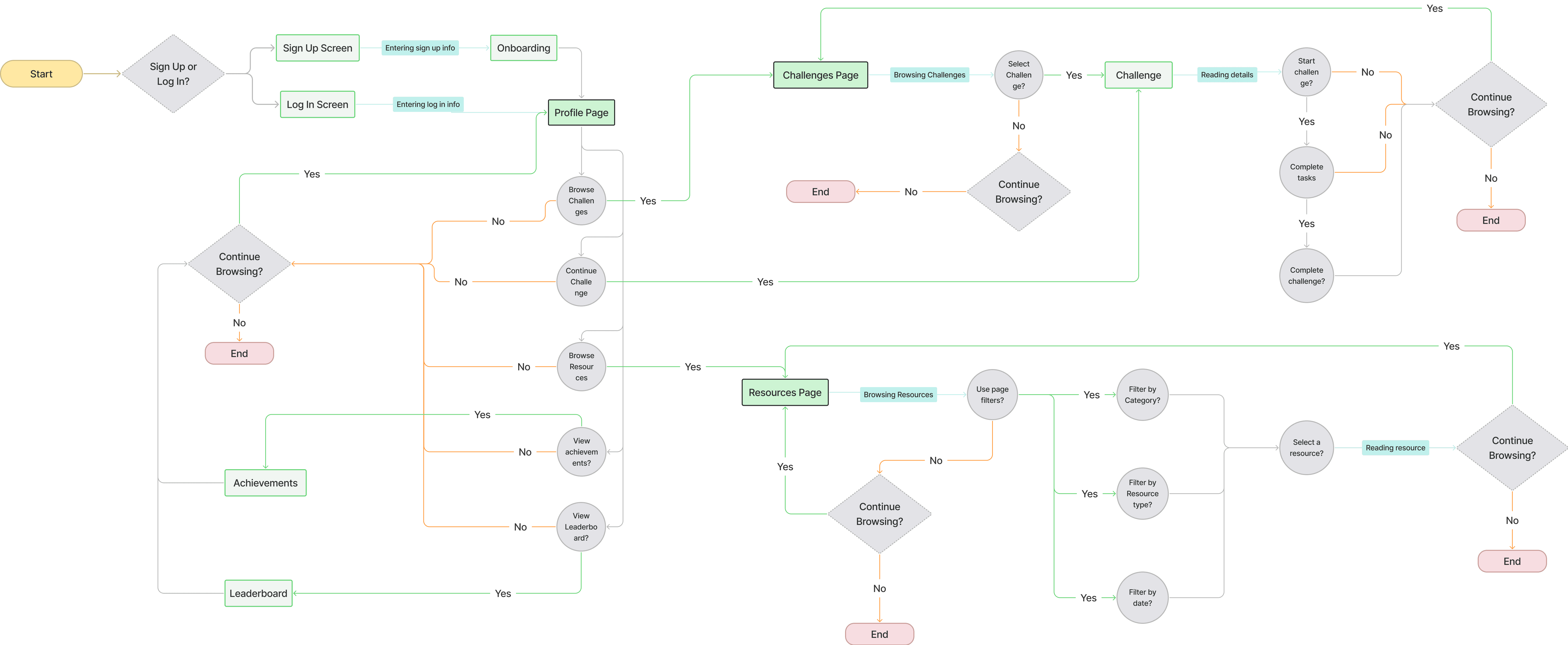
We used the user flow to explore how people might move through the site, and, combined with the site map, it shaped the website’s layout.
The user flow helped us visualize how users would move through the website. Together with the site map, it guided our design
User Flow
The user flow helped me visualize how my personas would move through the app. Paired with the site map, it shaped the app's design and navigation.
User Flow
The user flow helped us visualize how users would move through the website. Together with the site map, it informed the structure and layout of the website.
Wireframes
Wireframes
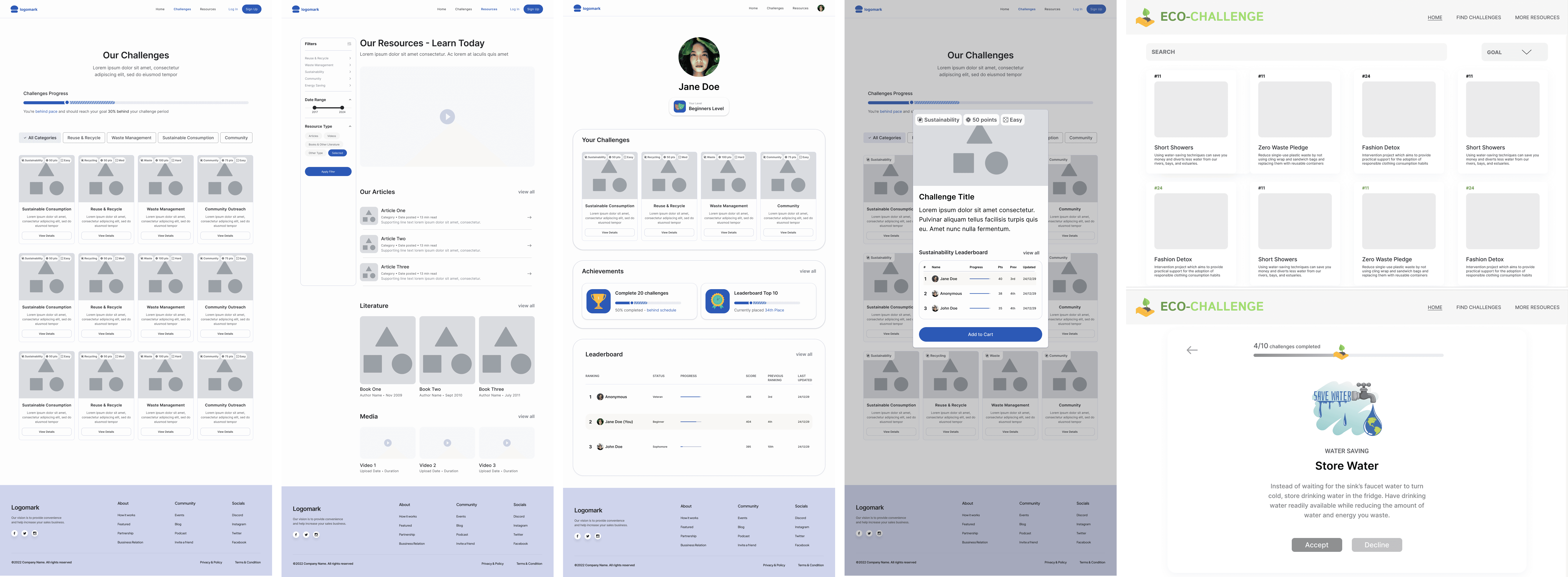
We started with low-fidelity wireframes to lay out the key screens and navigation, shaping the foundation for the high-fidelity designs later.
We created several low-fidelity wireframe iterations for initial testing before moving on to our high-fidelity designs.
Testing with users
Testing with users
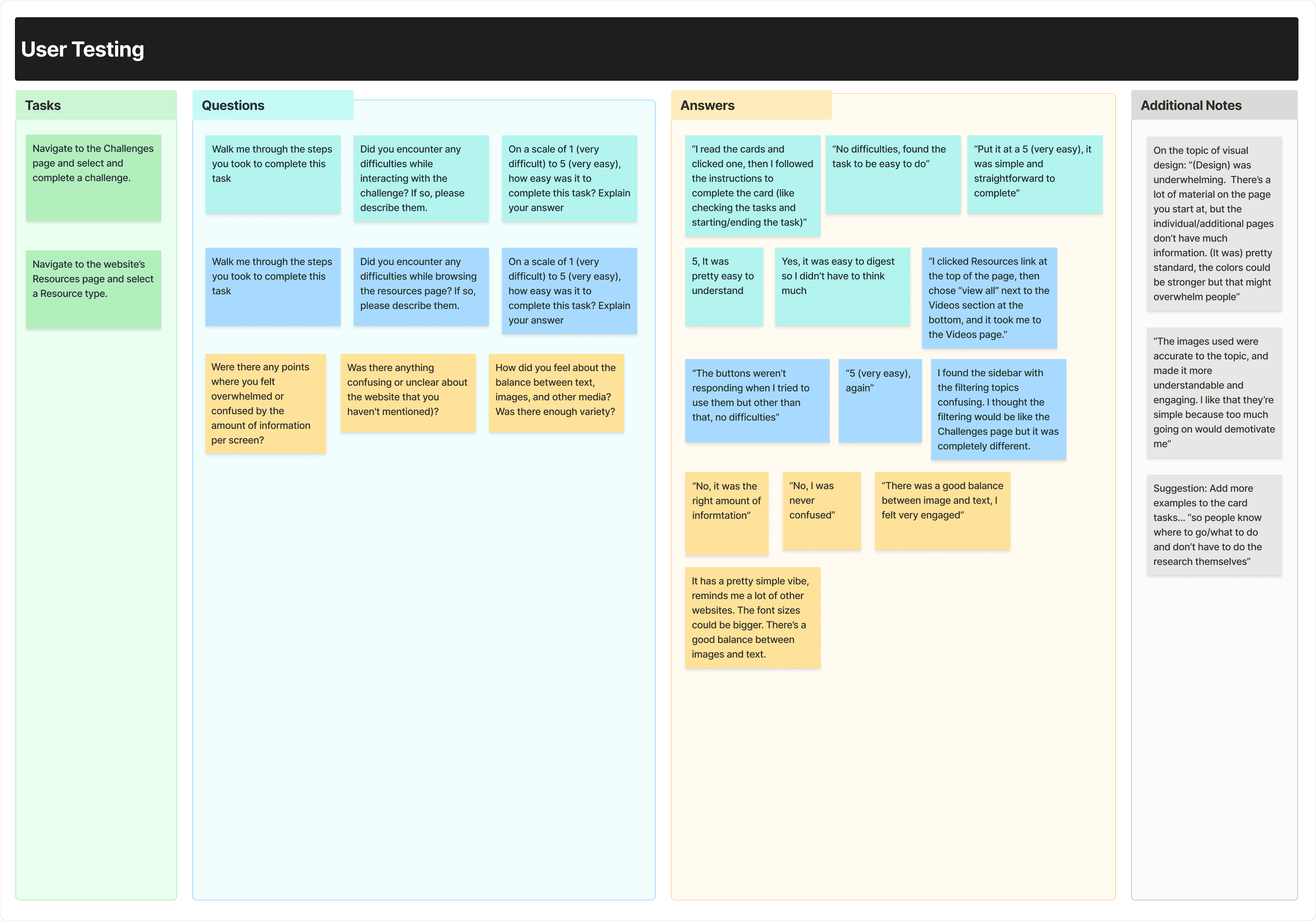
Several users tried out the website and shared their feedback. Their input revealed where the design could be simplified and easier to navigate.
Several users tried out the website and shared their feedback. Their input revealed where the design could be simplified and easier to navigate.
Users felt the quiz feedback wasn’t clear enough. They want to be able to review answers and detailed feedback.
Users felt the options for filtering on the resources page weren’t effective and inconsistent with the way other pages filter their content.
Users felt the cards used in the design were hard to read and interact with, asking for larger, more accessible sizing.
Users found the site plain, recommending more text and detail to improve clarity and engagement.
Underwhelming design
Users felt the visual design of the website was both underwhelming and uneven, with too much content on the main page and too little on subpages.
Users weren’t sure how to save events. They suggested using a more familiar icon (like a bookmark) and making the option more visible
Users felt the schedule page was redundant. They preferred having ongoing events listed directly on the home page for easier access
They felt the color palette made the app feel professional and appropriate for the theme
Users felt the options for filtering on the resources page weren’t effective and inconsistent with the rest of the website
Users wanted more examples within challenges to better understand what to do. They felt the lack of details reduced their motivation
Users felt the website's visual design was uneven, with too much content on the main page and too little on subpages
Testing with users
Several users tried out the website and shared their feedback. Their input revealed where the design could be simplified and easier to navigate.
Users felt the options for filtering on the resources page were ineffective and inconsistent with the rest of the website.
Users wanted more examples within challenges to better understand what to do. They felt the lack of details reduced their motivation.
Users felt the website's visual design was uneven, with too much content on the main page and too little on subpages.
Brand Identity
Brand Identity
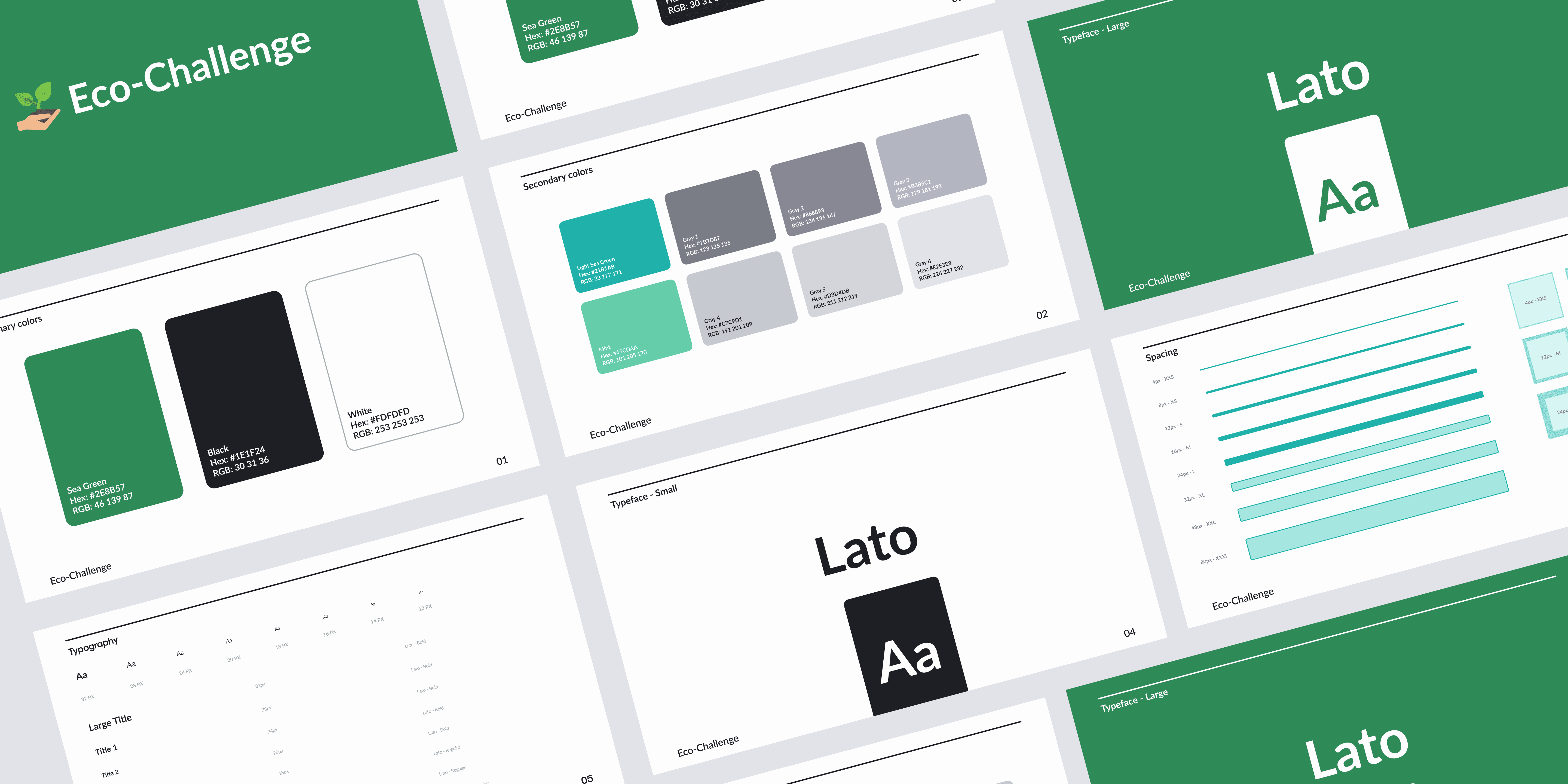
Sustainability can sometimes feel difficult to navigate. Eco-Challenge’s branding focuses on making it feel more approachable, combining a cool, vibrant palette with clean, modern typography.
Sustainability can sometimes feel difficult to navigate. Eco-Challenge’s branding focuses on making it feel more approachable, combining a cool, vibrant palette with clean, modern typography.